
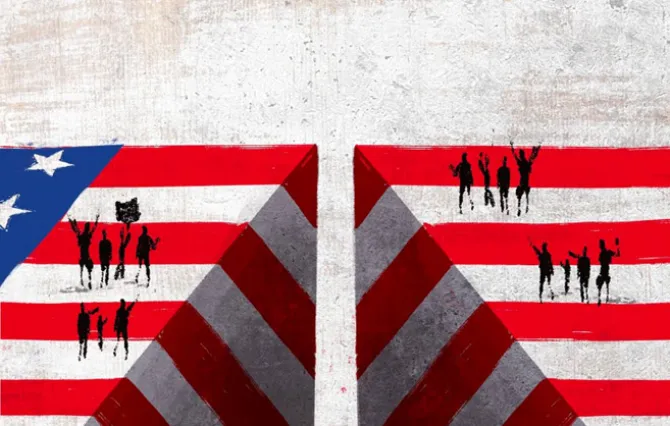
In our country, we often weaponize terms like socialism and capitalism to be used as political labels and insults rather than discussing them as the ideas that they are and the ever changing nuance of our laws and norms that bring them together. They are frequently used to frame one side’s ideology instead of encouraging an honest conversation about how our economic system actually works. The United States has never fit neatly into either category. In fact, no nation has maintained a purely socialist or purely capitalist economy for an extended period. What exists in practice is a mixed economy that combines private enterprise with public programs.
Although economists had long discussed economies that blended markets with government intervention, British economist J. R. Hicks helped popularize and formalize the modern concept of the mixed economy in The Social Framework (1942). In a mixed economy, private enterprise drives most economic activity while government provides public goods, regulates markets, protects consumers, and funds programs that private markets often do not.
Public schools and social safety nets are examples of government-provided systems common in mixed economies. Infrastructure projects such as highways, bridges, and broadband expansion also reflect this balance. Government contracts with private businesses often provide specialized expertise while supporting American jobs. These programs represent public investment and social policy rather than public ownership of industry, which is a defining feature of socialism.
Meanwhile, the free market allows individuals and businesses to build wealth by providing goods, services, or entertainment in exchange for profit. That is capitalism. Competition encourages innovation, expands consumer choice, and creates opportunities for entrepreneurship. At the same time, history has shown that without effective rules and oversight, market systems can concentrate economic power in the hands of a relatively small number of individuals or corporations. Recent economic trends suggest that one of the greatest challenges facing the United States today is the increasing concentration of wealth and market power resulting from insufficiently regulated capitalism.
History offers an important example. During the early twentieth century, Standard Oil controlled an overwhelming share of the nation’s oil refining and distribution industry. Its founder, John D. Rockefeller, became the wealthiest person in modern history. At his peak, his fortune was estimated to equal roughly 1.5 percent of the United States’ gross domestic product, giving him extraordinary economic and political influence. Congress passed the Sherman Antitrust Act in 1890 to combat monopolies and preserve competition. In 1911, the Supreme Court ordered Standard Oil to be broken up into multiple companies, several of which eventually evolved into corporations such as ExxonMobil and Chevron.
The federal government has repeatedly adjusted the balance between markets and regulation. Following the Great Depression, reforms such as the Securities Act of 1933, banking regulations, and the Social Security Act reflected a belief that completely unregulated markets could produce widespread economic instability. Although the economy has changed dramatically since then, similar patterns have reemerged in new forms.
Recent developments have renewed questions about whether America’s antitrust laws have kept pace with the modern economy. Amazon has been reported to use internal seller data to develop competing private-label products and then promote those products over smaller brands. Elon Musk’s acquisition of X, formerly known as Twitter, along with his leadership of Tesla and SpaceX, his founding of xAI, and business interests spanning artificial intelligence, communications, transportation, finance, and aerospace demonstrate how influential a single individual can become across multiple industries.
None of these developments necessarily violate existing antitrust laws. However, they have prompted debate over whether laws written to regulate the industrial monopolies of the late nineteenth and early twentieth centuries remain adequate for an economy increasingly shaped by digital platforms, artificial intelligence, massive data collection, and interconnected technologies.
As economic power becomes increasingly concentrated, a small number of corporations gain extraordinary influence over markets, politics, and public discourse. Their size can reduce competition, suppress smaller businesses, and increase their influence through lobbying and campaign spending. When companies become so economically significant that governments feel compelled to rescue them during times of crisis, the balance between democratic accountability and private economic power begins to shift.
The debate over whether America is capitalist or socialist often misses the larger truth. The United States has always operated as a mixed economy, balancing free enterprise with public investment and government oversight. The more productive question is not which label best describes our economy, but whether that balance still serves the public interest. If the balance shifts too far in either direction, the result can be an unhealthy concentration of power, whether political or oligarchical.
Democracy depends on informed citizens more than informed politicians or the mainstream press. The next time you encounter a headline, do not stop there. Read beyond it. Compare multiple sources. Ask questions. If a politician makes a sweeping claim, verify it yourself. Use books, reputable journalism, public records, and even artificial intelligence as tools for learning, not substitutes for critical thinking. Critical thinking is not about doubting everything. It is about refusing to believe something simply because it is repeated often or because it already agrees with what we want to believe. A healthy democracy depends on citizens who are willing to question, learn, and think for themselves.
Simply knowing facts you memorize does not equate to being knowledgeable of them. To state that America is a mix of both capitalism and socialism is indeed a fact, but explain why that is.