

Summary
Republicans suffered their worst midterm in years, losing both the House and the Senate. In the week since, President Trump accepted the results, reversed himself with claims of fraud he has not backed up, pointed the Justice Department at his opponents, and handed the White House to Stephen Miller. Taken one at a time, they look like headlines. Taken together, they look like a plan.
One week, four moves
- Nov. 3, The Concession: On election night, Trump told The New York Times he was "absolutely willing" to accept the results. "We'll probably work something out"
- Nov. 6, The Promotion: Trump named Stephen Miller, architect of his hard-line immigration agenda, to replace Susie Wiles as chief of staff
- Nov. 7, The Order: Trump claimed, without evidence, that Democrats sent "threatening" letters to Republicans. "I am ordering the Department of Justice to look into this criminal act, immediately!"
- Nov. 9, The Reversal: "Does anybody really believe that this 'Election' was honest? How could the Polls be so wrong???" And then: "It's all about the machines, which are far more important than the voter!"
That last line deserves a second read. The machines are more important than the voter.
Who is Stephen Miller?
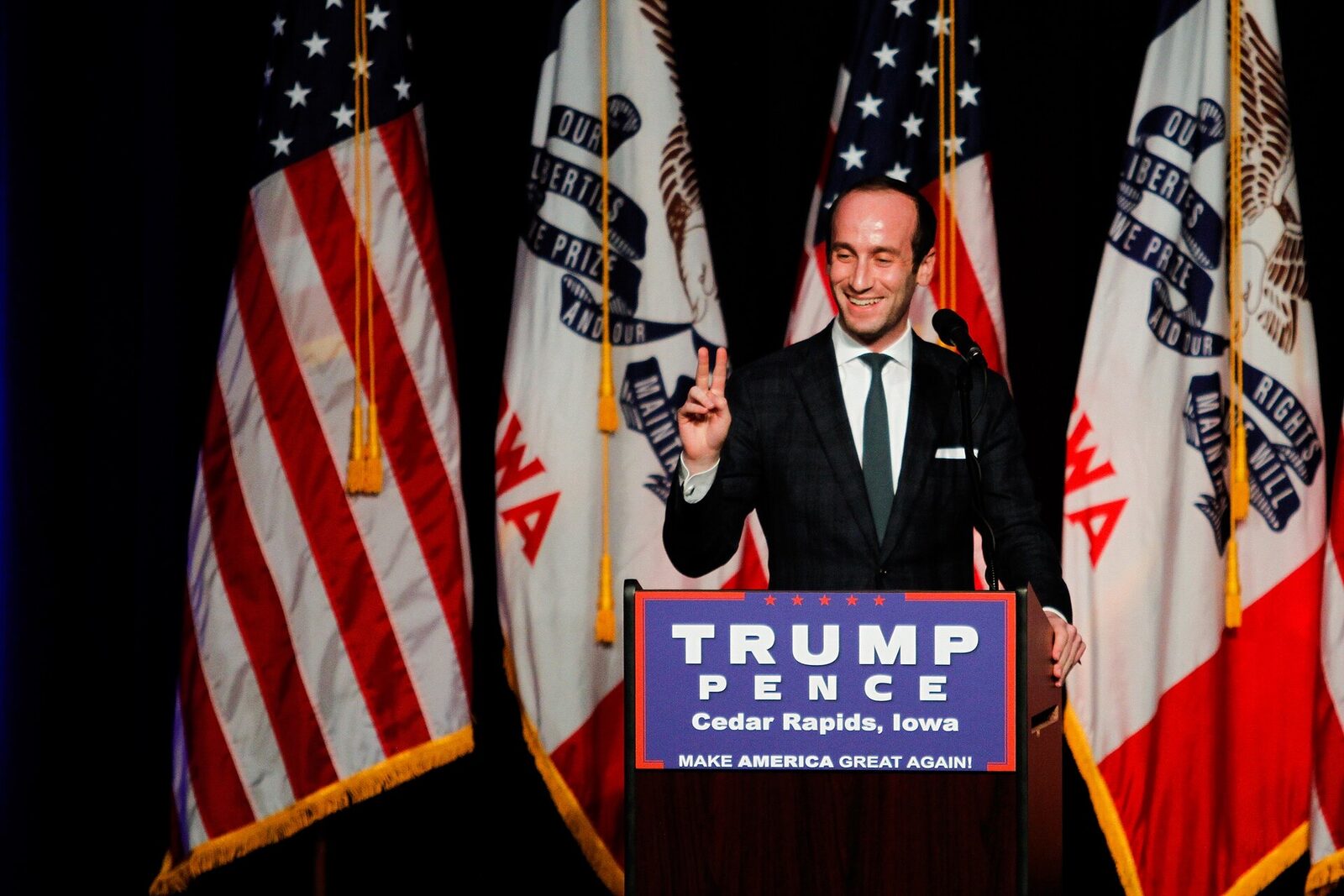
Miller joined Trump's 2016 campaign as a speechwriter after working for Jeff Sessions, and he has been at the center of the administration's immigration crackdown ever since. Promoting him days after a historic defeat is not a signal of compromise. It's a signal of who Trump trusts when things go wrong.
It's also a contradiction. The same week, Trump told CBS that his mass-deportation agenda "might be too tough." You don't soften a policy by promoting the man who wrote it.
Even his own party isn't buying it
Here is what's different this time. The Associated Press found that fraud claims were far more limited after this election. Defeated Republicans conceded. There was no wave of lawsuits. Trump himself admitted on Fox News that voters weren't willing to accept "paying more for gasoline" because of the Iran war, and he added, "We would have won easily if I was on the ballot."
He wasn't. Voters were.
The machines aren't the threat
The fraud claims will not overturn this election. That isn't the danger. The danger is what they build toward: a Justice Department aimed at political opponents, a White House run by its most combative voice, and a story about stolen elections waiting on the shelf for 2028.
The first real test comes fast. Government funding runs out December 11. Trump says he wants to make deals with Democrats. Miller built his reputation on fights, not deals. Which version shows up?